The complete guide to opening a bakery or pastry shop in Israel
Have you decided to open a bakery or pastry shop and don’t know where to start?
This guide will help you understand the steps in opening a successful bakery/pastry shop.
What are the things that need to be planned in advance, and the list of equipment you will probably need.
And most importantly, how can you increase your chances of success?
And later you will turn this mission into a pastry empire.
How to choose a type of bakery or pastry shop
The world of bakeries is bigger than it seems, and there is more than one type of business in the bakery sector.
A neighborhood bakery, a cafe, an industrial bakery, a pastry catering and an almost identical variety of confectioneries.
Each of these is characterized by different challenges and a different customer base.
Before deciding to open a bakery or pastry shop, it is important to understand the differences between these types, in order to bridge the gap between the vision you have for the business and the reality and challenges.
The difference between confectioneries and bakeries
Bakery: A business that processes basic products, such as water, flour, salt, sourdough, and yeast, and bakes them into baked goods that are sold as is. For example: breads, sourdough bread rolls, baguettes, rye bread, challahs, etc. That is, a product in which only the baked dough is the final product, without added fillings, special processing, etc.
Baking has been considered one of the oldest businesses in human history since we have always consumed bread.
Confectionery: is a place where gourmet products, such as cakes, cookies, and other desserts, are produced. And because of the precise science that is sometimes involved in the creation of sweet pastries, this profession is considered one of the principals of the culinary arts. It requires learning, chemical understanding, creativity, and great precision. Confectionery also incorporates dough that is processed in the same way that bakery doughs are processed, but with different processing and added processes that will transform the dough into quality cakes.
What are the considerations in choosing?
Choosing between the two depends mainly on your experience and passion . You may have gained experience working at the neighborhood bakery, or you have a passion and are the ones asking them to bake cakes and cookies for family events.
And later, in light of the hobby, they said they offered you a fee for the service and you realized that it was possible to make a business out of the hobby.
So you’ve chosen a direction – and now?
How to build a bakery business plan
You have decided what business you want to open.
So how do we turn a dream into a business plan with strategies for implementation?
Executive Summary
We begin by writing down our vision according to the first section of the article, giving an overview. About the market you want to enter, the number of competitors, how you will market the business, and your financial outlook.
The summary is written in the first stage and is supposed to provide information mainly to external parties such as banks and investors. It is a summary document by definition. Therefore, it is recommended to write it at the end of the business plan.
Once you have defined the vision, it is time to understand the terrain.
How to research competitors and learn from them
Before planning the business, you must understand what bakeries/pastries already exist in the area.
Create a list of all potential competitors within a predetermined radius. This can also be done from your home computer using Google or your favorite artificial intelligence.
Write down the name of each competitor, their address, and which areas of the city they are located near.
Areas such as: industrial, leisure and entertainment areas, residential neighborhoods, and more…
Now go out and visit each of them, and in the same table write down the answers to the following questions.
The tests we recommend you do
- What kind of products do they display on the shelves?
- What are their best-selling products?
- What is the approximate size of the business?
- What equipment do they use?
- How many employees are there in the business?
- What deals do they offer?
- Are customers sitting in place?
- What characterizes the customers who come in: age range, gender, job, social status…
- What are the colors of the business?
- What is the average value of each transaction?
- Do customers return?
- Do they make and bake or bake semi-baked products?
- Try to identify who their suppliers are?
- Is this a franchise or personal entrepreneurship?
Answering these questions will help you understand how the business works and what allows it to exist.
Example: Bakery x is located in y near an industrial and high-tech area. They sell a variety of pastries and barista coffee. Mainly to high-tech workers , from morning until late afternoon.
The average transaction value is z shekels and between 3-4 products. Customers sit on the pedestrian street on the business’s chairs and tables, and they serve themselves to the table independently and without a waitress.
The menu consists of 20 baked goods (it is recommended to take pictures of the menu and prices) and types of coffee.
The business is designed in a rustic style and the logo colors are brown, black, and red. Etc.
Marketing activity analysis and examples
Ask customers how they first heard about this place and what made them come back.
Then try to identify all of the business’s profiles and campaigns on social media, write down the business’s name on social media and log into the profile if there is one, and try to identify whether it is running sponsored campaigns in the “Profile Transparency” area on each platform.
Write down what type of posts and ads each business publishes and how they look to you.
Ask questions like:
- Are most of the advertisements or posts filmed inside the business?
- Are the majority videos or photos?
- Does the business invest in sponsored advertisements on networks and if so, what do they look like?
- Is the content of the publications educational or entertaining?
- What is the main content of each image or video?
- Is there any content that looks similar in its structure, whether it’s images or videos?
- Is there audience engagement on the profile or posts, such as many comments or a high number of likes?
At this point, you can use available automation tools to collect data about them from the network.
These questions will help you identify which competitors are investing in marketing, and which approach works!
When you have answers to these questions, it will be easier to build a marketing strategy.
Offer, differentiation and target audience
Or in other words: what do you offer to a certain customer base differently than others!
It doesn’t have to be complicated.
After you have researched the competitors in the area where you want to open a bakery, ask yourself:
Is there a similar area in the city that does not have a leading competitor and what characterizes the area, a high-tech area, a newly established neighborhood, perhaps a mall that does not have a cafe or bakery?
Once you’ve thought of a specific place, you’ve probably found the location and your target audience.
However, don’t expect customers to immediately run in to buy from you.
It makes much more sense to attract customers to you with something that catches their eye, or a concept they have never experienced before.
It’s best to give customers an offer they can’t refuse.
This can be reflected in the design of the business, the prices you offer, the amount of products on the menu, the type of food you sell, and many other ways to speak to your audience!
Please note that the method you choose should suit your audience and location.
For example: You would not build a luxury cafe and pastry shop in the middle of an assisted living or slum neighborhood.
Just as you wouldn’t set up a bakery that mainly sells rolls and challah in a high-tech center.
Therefore, it is worth thinking about what the audience I want to attract appreciates the most.
Do low prices or special boraxes and Kosmin breads speak to him?
This way you will know what is most important and in which areas there is an opportunity to invest.
How to find the perfect location for a bakery
Often, first-time entrepreneurs must have everything perfect, and end up paralyzed by over-analysis.
That’s why we’ve prepared a checklist that’s easy to rely on.
1. Defining a target audience
Defining your target audience depends on your list of optional locations, so it’s a good idea to review each one individually and ask the following questions.
- Decide who your main customers are : families, students, offices, passersby.
- Check what times of day they buy pastries (morning, lunch, evening).
- Estimate how much money they spend on average (potential shopping basket).
2. Checking foot traffic
The goal is to check the compatibility between the vision you have in mind and the population in a particular area.
- Stand at a potential location for at least two consecutive days and check the number of embryos.
- Record the peak hours (morning, afternoon, evening).
- Check if most of the passersby are from the audience you want to attract.
3. Competition mapping
After we’ve checked out a location provider, it’s worth going back to the competitor table we created at the beginning,
And see if you can differentiate your business from the competition and stand out.
- We marked bakeries, confectioneries, cafes, and grocery stores in the area.
- Check what they sell, in what price range, and what their occupancy level is.
- Decide what your differentiation is (special flavors, design, service, kosher, opening hours).
4. Accessibility and convenience
Will it be easy for customers to reach and find you?
The goal is to check whether the level of effort to reach a particular location is greater than the reward the customer will receive when they arrive.
- Is there parking nearby (even short)?
- Is the place accessible by public transportation?
- Is there a wide sidewalk/convenient entrance for pedestrians?
- Is there a movement of children with parents, employees, or an audience that you want?
5. Costs and conditions
Ask yourself and check whether the location makes financial sense (business feasibility)
- Check the rental price per square meter and compare it to other destination areas.
- Look for information about rental contracts in the area (expected increases, property taxes, management fees).
- Estimate how much it will cost to adapt the property (electrical infrastructure, chimney, cold storage).
- Check whether permission from authorities is required for such a business in the area (a pastry shop or bakery in a mall, or a commercial center or near residential buildings)
6. Field tests (optional)
The purpose of this test is to confirm business feasibility.
Please note that in most cases there will not be the option to perform such a test, but it is an effective but not critical step.
- Open a temporary booth at a fair/market/community center in the area.
- Measure how many people buy, which products are most popular, and what price they are willing to pay.
- Ask customers what they miss in the bakeries they tend to shop at.
7. Final decision
Include all the tests you did in the previous sections and start narrowing down the options.
Our tip is “Use the negation method.”
- Compare 2–3 final locations.
- Consider: traffic + target audience + competition + convenience + costs.
- Choose the location that gives the best balance , not just the lowest price or the most luxurious street.
Calculating start-up costs for a bakery
Calculating costs involves several elements, and it varies depending on the type of bakery/pastry shop you want to open.
So we divided the costs into fairly broad categories to illustrate the plan.
Regulations and licensing
Please note that this list reflects some of the licenses and permits you will need, but not all .
Therefore, it is important to consult with a professional or a representative from the supervisory authority who will guide you.
Required licenses to open a bakery/pastry shop
- Business License – Obtaining a business license has become a simple and quick process, and many people are afraid to take the step, so we have added a link to the government website where you will submit a license application to open a bakery.
- Ministry of Health approval :
The National Environmental Health Agency is responsible for ensuring that all food consumed by the public is safe to eat.
Therefore, there are a variety of tests and regulations that every food business must comply with.
Here you can learn about the approvals and permits of a food business .
- Fire extinguishing certificate :
Installation of fire detection and extinguishing systems according to standard.
Emergency doors, escape exits, safety signage.
- Environmental approval (in some cases)
Especially if there is smoke/odor emission (large furnaces, factories).
Air filtration and exhaust systems.
- Business insurance – not mandatory by law, but a practical obligation:
Building, equipment, professional liability and third-party insurance.
- Food producer certificate (in industrial bakeries/factories) – from the Ministry of Health.
Required for those who produce for large-scale commercial marketing.
- Import licensing (if importing special raw materials or equipment) – from the Ministry of Economy and the Ministry of Health.
- Kosher certificate (optional but very common) – from the local rabbinate or Badatz:
Supervision of raw materials and the production process.
It is usually mandatory in Israel to reach a broad market.
Optional licenses / depending on the nature of the business
- Delivery/refrigerated vehicle license – if the business distributes or supplies to supermarkets/restaurants.
- GMP / HACCP / ISO 22000 certifications – food quality and safety standards; not mandatory for small bakeries, but required in factory bakeries and manufacturing for large retailers.
- Accessibility certification – in accordance with legal requirements for businesses open to the public
- Building/renovation licensing – if changes have been made to the structure, such as a chimney, ventilation system, sewer lines, or division of spaces.
Important to know
The process varies between municipalities and authorities.
A neighborhood bakery will mainly need a business license, Ministry of Health approval, fire department approval, and a kosher certificate.
A factory bakery will also need a manufacturer’s certificate, environmental quality, and international quality standards.
For the most part, these permits are the main bureaucratic process in opening a food business.
Therefore, it is recommended to approach them with patience and a more flexible schedule.
Bakery equipment list
Baking production equipment is the largest investment when it comes to opening a pastry shop/bakery.
Therefore, it is important to know what equipment is necessary, what equipment can be postponed, and what machines should not be compromised on.
1. Ovens
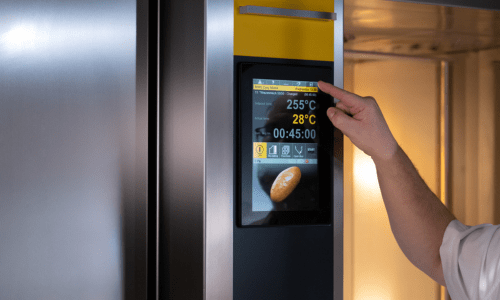
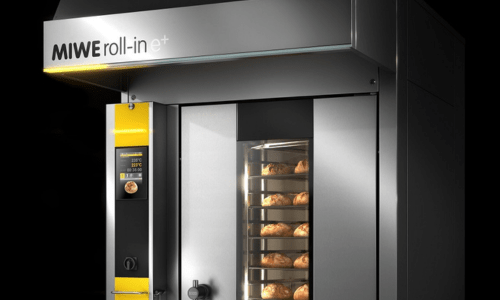
- Cart ovens – the workhorse of most bakeries, and this is probably the oven that comes to mind when you imagine a modern bakery oven (left).
It is characterized by one door with a glass window and inside it is a cart with tiers of trays on which the products you bake are placed.
- Stone/Cell Oven – An oven that is often used to bake breads in direct contact with the heat source (the cell floor). This is the critical component in creating the crispy part in a variety of breads and pizzas. Confectioners also like to bake products such as cheesecakes in such a static oven without any visible movement.
- Tunnel ovens – This is a long conveyor oven in which the breads pass on a conveyor with an adjusted baking program that can be set in advance.
Tunnel ovens are usually only found in large factories that require high production output, although small versions are available in pizzerias and small businesses.
Most often, controlling them involves the conveyor speed and baking temperature.
The oven is the beating heart of your business and should not be skimped on, and before buying an oven for your business, it is important to understand the differences and functions of each of them.
2. Mixers and blenders
We wouldn’t recommend cutting corners here either, but it’s definitely recommended to understand the difference between the two to save on the costs of an additional machine.
- Kneading: As the name suggests, its function is to knead the basic raw ingredients (flour, water, salt, and yeast) until a uniform dough with a well-developed gluten network is created.
- Mixer: Its function is to mix raw materials and various doughs such as: meringue, cookies, whipped cream, icings, and also doughs for breads.
A mixer comes with several tools: a dough hook, a whisk, and a whisk. The choice of one of them depends on the type of product and the texture you want to achieve.
In case you want to buy a mallet and aren’t sure which one, we have prepared a guide for purchasing a mallet for your bakery .
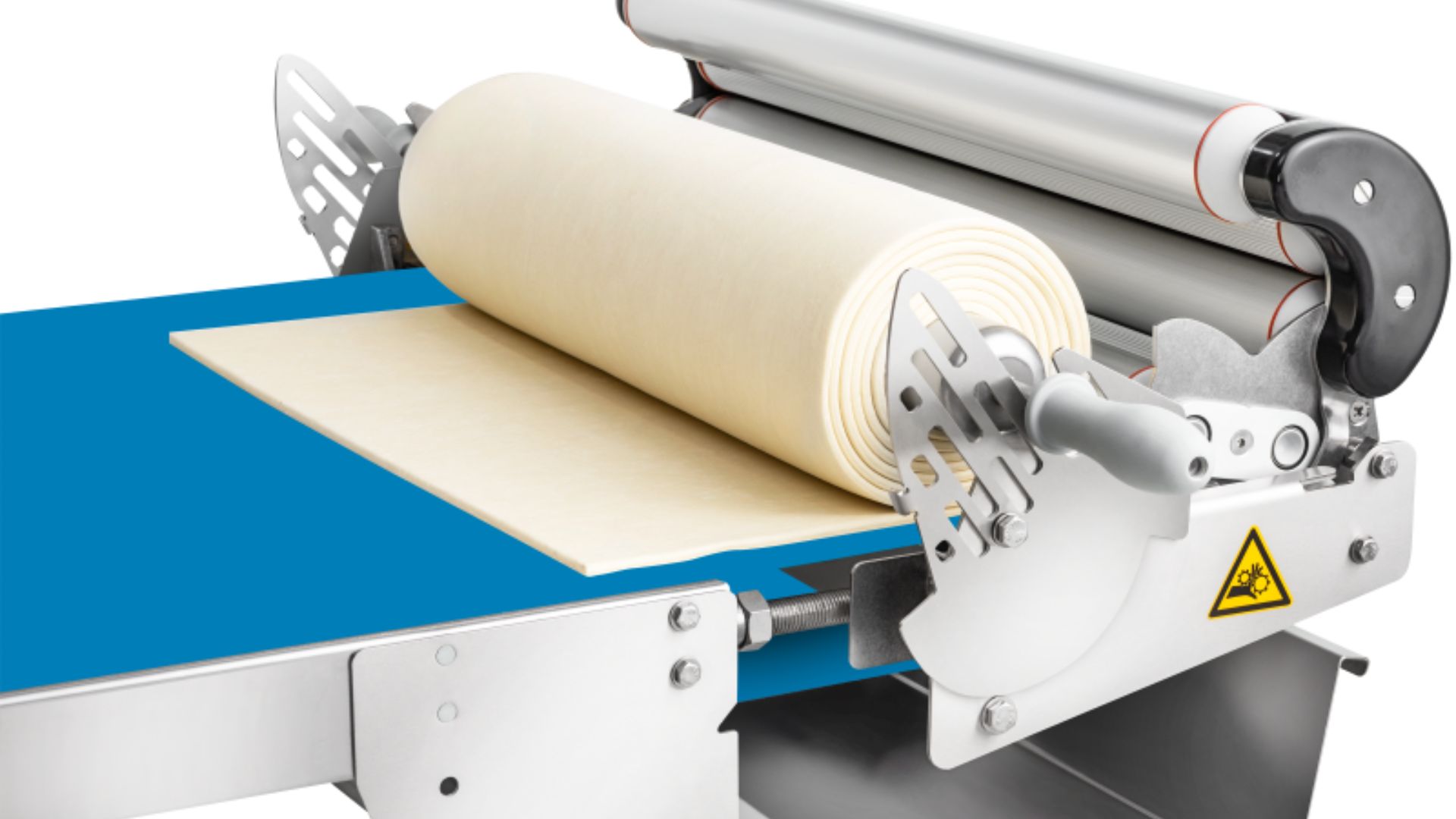
3. Dough processing equipment
Processing the dough and preparing it for baking is our specialty and the variety of machines that help us achieve a perfect product is large, so we decided to prepare a list for you.
- Dribbling
- Eccentric carts
- rebellions
- Cookie icing and cutting machines
- Inflation systems
Each of these tools allows you to produce uniform and perfect baked goods every time.
You can read about each of these in detail on our blog .
4. Packaging and conveying equipment
The role of all these machines is to enable safe packaging and automation.
The function of the conveyor belt is to connect machines to create a complete production line without human intervention.
These systems are designed for large factories where, after cooling, packaging is done automatically, or with manual combination of individual products.
- Packaging machines (flow-pack) for bread, cakes, pastries
- Shrink/Vacuum machines
- Conveyors and internal transportation systems
- Date and label printers
5. Storage and dosing systems
It is impossible to talk about a bread factory without mentioning the silo systems. These systems are the most iconic tool in any large bakery.
And thanks to them, you can identify a bread factory from miles away thanks to their size and shape.
- Silos: Storage of dry raw materials (flour, sugar, salt)
- Automatic dosing and weighing systems
- Oil/water tanks with temperature control
6. Refrigeration and preservation equipment
Freezers and freezers are an integral part of the production process when it comes to products that are sold frozen for baking in bakery corners.
Refrigerators allow you to maintain product hygiene and extend its shelf life.
And in case you want to sell baked goods to bakeries, supermarkets, and hotels, the requirement is to produce semi-baked products, and allow them to finish the process on site.
- Refrigeration and freezing chambers
- Blast Freezer for quick freezing of meat
- Display refrigerators (if there is a direct sale to the customer)
7. Dedicated confectionery equipment (if applicable)
Want to make a line of homemade cookies or make perfect birthday cakes?
We have all the tools to make this happen.
Who knows — maybe you’ll create the special line that will make you a household name in the field.
• Chocolate Tempera
• Automatic sprinkling machines
• Cream / filling / glaze machines
• Small ovens for boutique bakeries
• Cookie icing and cutting machines
• Jam syringe for donuts
• Chocolate melting machines
• Automatic cooking pots for confectionery
8. Auxiliary and operational equipment
Auxiliary equipment refers to the tools you work with every day, whether it’s oven carts or cake pans and machines that coat sesame seeds and grains.
- Stainless steel or aluminum carts and molds
- Sourdough preparation system
- Stainless steel utensils and baking pans
- Industrial cleaning and disinfection systems
- Quality measurement equipment
J. Gottlieb provides equipment solutions for bakeries of all sizes — from neighborhood bakeries to industrial production lines.
Most equipment comes in a wide variety of sizes and configurations, so the price range can vary greatly depending on the needs of each business.
To properly estimate setup costs, it is recommended to make a neat list of all the equipment you think you will need. Even if a certain item is missing or if you are unsure about a particular model — that is okay.
With such a basic list, you can receive a more accurate estimate from our professional team to match the equipment to your goals, production volume, and budget.
This information will help you build a complete cost picture and prepare properly for establishing a bakery or confectionery.
The complete list of equipment for opening a bakery can be found on our website.
9. Computing and operating equipment
• Office/laptop computers – for managing orders, invoices, inventory management.
• Screens and cash registers (POS) – at points of sale.
• Receipt/invoice/label printers – including barcode printers for packaging labels.
• Small server / cloud computing – for large bakeries with several branches.
• Tablets or industrial screens – for use by the production team (displaying recipes, production instructions, reports).
10. Management software
- POS software – for sales management, payment methods, daily cash management.
- ERP production management software – in factory bakeries: management of production lines, inventory, costs.
- CRM – for customer management, customer club, promotions.
- Accounting software – positive for every business.
- WMS warehouse management – if there is large-scale distribution.
11. Digital equipment and infrastructure
- Security camera system (CCTV) – for both guarding and supervising the production line.
- Stable internet network + internal Wi-Fi – for communication between stations and management systems.
- Website / online store – for direct sales and marketing.
- A delivery management system – if you offer a distribution service to private customers.
12. Technological auxiliary equipment
- Barcode Readers / RF Guns – for inventory counting.
- Customer display screens – for displaying prices, menus, promotions.
- Digital time clock system – for employee management.
- Sound systems (public address / music) – at points of sale.
You may not need much of this equipment list, depending on the nature of your business.
Marketing and branding expenses
Logo design, packaging, website, photo shoots, online influencers, marketing agency and more.
You can easily evaluate this part after the competitor research phase.
We recommend defining a dedicated marketing budget in advance. It is important to know that there is no “sacred” number.
But there are accepted rules:
- Small/New Business (First 1-2 Years) :
8% – 12 % of the menstrual cycle .
Because it’s important to “create an entrance” – to bring in new customers who will get to know the new business in the city.
- Stable business (existed for several years, with a regular audience) :
4%–6% of the menstrual cycle .
Focuses more on retaining existing customers, customer clubs, and targeted advertising for new products.
- Minimum investment required :
Even if the budget is tight, at least 1,500–3,000 NIS per month (depending on the size of the business), for advertising on social media, neighborhood ads, or in print.
You can learn more in our guide that explains how the best food businesses (including our major clients) approach marketing and what the marketing principles of confectioneries and bakeries are in a more specific way.
In it we go over strategies that help our clients succeed.
And checklists with lots of practice!
manpower
Calculating labor costs can be frustrating, so it is recommended to visualize the daily functioning of the business.
And count the number of people on the team according to the amount of production, number of service personnel, peaks and working hours.
This stage is called defining needs: and it provides an estimate of the number of employees per day, hours, roles, and salary.
List how many bakers you have and what hours of the day they will work.
Write down how many service personnel will work and what hours per day.
Please note: If you want to sell challah and rolls on Friday, you will not need the bakers until closing time.
Therefore, they will arrive early in the morning until they have finished baking all the carts and cleaning the ovens, and all that is left is to sell the goods by the end of the day.
Research each type of employee and their average salary in the market, calculate the gross salary and add the employer’s costs to it.
Today there are digital tools that can help you calculate costs and estimate wages.
Use automatic calculation tools to get an accurate picture of the labor costs for the bakery you want to establish, and tell it how many employees you need and what their average salary is in the economy by category.
Ask him to calculate the employer’s costs and how much you will need to spend on personnel costs in total.
Working capital
Ongoing operating costs: electricity, gas, water, maintenance, raw materials or contracts with suppliers and rent.
Working capital is something that is very difficult to calculate when the business is only in the planning stages.
To find out the costs of each category, you will probably need to do some research and make a few phone calls.
Call flour suppliers and ask how much a business of your size orders and calculate the monthly/annual cost.
To find out the cost of supplying the semi-baked products, call and request quotes from the leading manufacturing plants for the list of products you are interested in.
To find out the rental prices, consult a real estate agent or contact a business with a similar square meter to the one you need.
Also add the salary costs according to the previous section and add them all together.
This way you can roughly estimate all of the business’s expenses by time period and prepare a plan accordingly.
Here are the steps for calculating start-up costs and operating capital.
The steps for building a revenue and expense forecast
Divide your expenses into three main groups:
Start-up expenses (one-time):
- Renovation of the premises and adjustments to an industrial kitchen.
- Purchase of equipment: ovens, mixers, refrigerators, cooling and ventilation systems, cash registers, management software, etc.
- Licenses, permits, insurance, business registration, etc.
- Branding: signs, logo, website, interior design, menus.
- Purchase of initial inventory of raw materials and packaging.
Tip: Add a safety factor of at least 10–15% for the unexpected.
Fixed current expenses (monthly):
- Rental and property management.
- Employee salaries (bakers, cashiers, drivers, cleaners).
- Electricity, water, gas.
- Insurance and ongoing maintenance of equipment.
- Accountant, management software, music licensing, cleaning, etc.
Variable expenses:
- Purchasing raw materials (flour, yeast, sugar, eggs, butter, packaging).
- Advertising and marketing expenses (advertisements, promotions, printing, digital promotion).
- Transport and transportation.
Estimating expected revenue with an example
A realistic assessment is based on Sales forecast by product type and number of customers:
1. How many customers are expected per day × average purchase per customer = daily income.
2. Daily income × number of days of activity = monthly income.
for example:
50 customers per day × 35 NIS average order × 26 days of operation = 45,500 NIS per month.
Tip: Also do a conservative, realistic, and optimistic scenario – to test sensitivity.
Building a monthly forecast for the year ahead
Create a sheet (in another Excel table) in which you will detail:
- A line for each type of expense and income.
- Planning for each month.
- Column for gross profit and net profit.
- Calculation of the break-even point – how much we must sell to not lose.
Analyze and draw conclusions
- Do revenues cover expenses within a reasonable time?
- Do you have enough equity to get through the first few months of losses ?
- Which sections seem inflated and could be reduced?
Building a menu and products
Building a menu for a bakery or pastry shop is a fascinating process that consists of several important steps.
And this is one of the things that food business owners don’t understand, and those who do understand get to grow and profit.
1. Research and strategy
Here we connect the research we did in the business plan
To our target audience.
The questions you want to answer are:
What products does my audience want to purchase?
What products can he afford?
2. Organization and content
Here you create the list of products and divide them into categories.
And set a strategic price for each one.
Aim for a list of more than 20 products.
Each of them is then given a label and appealing descriptions.
3. Campaign design
This is where the design is created and every item, from the text font to the product image, is compatible with your business.
And always ask yourself whether the menu attracts me to buy .
4. Continuous analysis and profitability improvement
Here we collect all the data regarding the sales of each product.
And use marketing and pricing strategies to become more efficient and sell effectively.
How to market a new bakery
For over 40 years, we have been serving customers in the baking sector, who today produce a large percentage of the bread consumed in Israel. This is after decades of neglecting our confectionery.
No business starts with giant factories.
We’ve always been curious to know how exactly the leading bakeries and confectioneries achieved this growth?
And in what ways was their approach different from others?
Therefore, we have summarized the most important principles
- Clear identity and appropriate branding: This includes a consistent design and a compelling story
- Digital presence: Makes your business the first thing a customer thinks of when they search for baked goods.
- Local Marketing and SEO: Using a variety of marketing strategies such as street tastings and neighborhood events to profiles on map sites in your area
- Promotions and product innovation: New promotions and renewed products with a twist
- Customer service or a worthwhile offer: These are the things that make customers come to you for the first time and become regular customers.
- Performance measurement and continuous improvement: When a product is not selling, the goal is to understand why — price, quantity, display location, or customer lack of awareness. Is it the price, quantity, color, awareness of the product, or is it simply that no one is interested in it this way and it needs to be presented differently.
Receiving the equipment and starting work!
So you found the right place, got all the permits, researched, designed, talked to us about the equipment that will serve you on your journey, and even ordered everything.
Here you will understand what the steps are from the moment you receive the equipment to the moment you produce and sell on your own!
1. Installation
The installation step varies greatly depending on the type of equipment you have.
And can take between two hours and two/three days to install.
Therefore, it is important to prepare in advance!
Installing the equipment may also require the participation and approval of other professionals.
If it involves installing a furnace, it is mandatory to make an appointment with a chimney sweep and a burner technician!
They must order and install the chimney and adjust the burner during the assembly stages,
Therefore, it is very important to coordinate the installation date in advance.
2. Training
Training is only provided after the installation and approval phase is complete for specific equipment.
Here, our technician or baking instructor will teach and explain all the important elements of operating, maintaining, and cleaning the machine.
Therefore, it is important to inform the staff and bakers in advance. Their presence is very important at this stage, since they are the ones who will work with the equipment on a daily basis.
You can also record the training process for use in case you forget how to turn on or off a particular function on the equipment and in building a work plan later.
3. Baking/Product Testing Phase
We check and adjust the performance of the equipment according to your requirements .
For this reason, it is necessary to prepare the raw material in advance, whether it is dough for rolling or buns for baking.
This step is necessary before you start building a plan for each product.
Here, our team of bakers and technicians test the equipment using raw materials and adjust the machine so that the air and heat pass evenly inside the baking chamber.
4. Building work plans
After we adjusted the equipment to the customer’s satisfaction, the phase of defining the work plans arrived.
These plans are meant to serve you throughout the entire production life, and each product has a unique plan.
The programs allow the baker to produce an identical product with peak efficiency.
Building a plan is not a simple thing and sometimes you have to use the “trial and error” method,
Until you reach a uniform and perfect product with every bake.
And now all the equipment is ready and customers are already drooling outside your doors,
And all you have to do is open doors and start working.
Summary: Your path to opening a successful bakery
Good morning! You have understood the main steps and what is important to plan and consider before opening a bakery.
The secret to the success of any bakery depends on three main things : a quality product, customer satisfaction, and marketing.
Whether you want to start a chain of bakeries or you want to take your hobby to the next step!
We at Gottlieb will do everything to make the dream a reality.